

In 30 Seconds
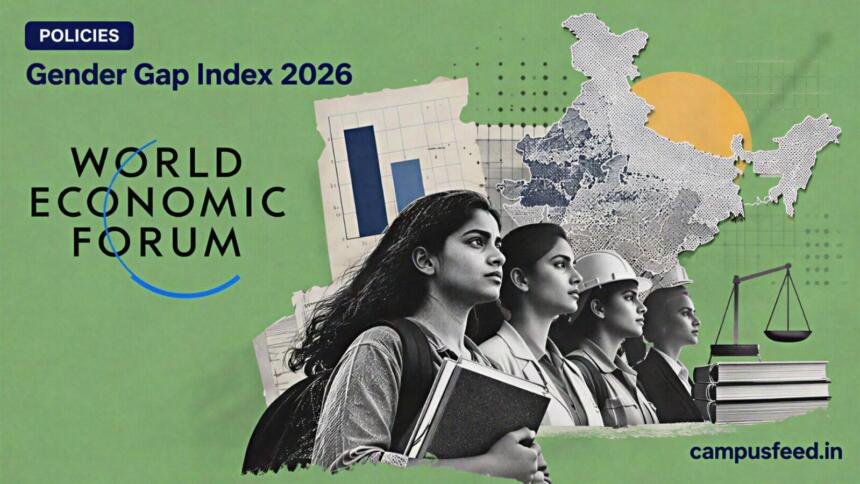
The rank: India is 131st of 145 countries in the WEF Gender Gap Index 2026.
The strength: School and college enrolment is at full parity between girls and boys.
The gap: Women’s job participation parity is 44.1%, and senior-role parity is 13.1%.
Still unknown: Whether the education gains will reach the job market at all.
India ranks 131st of 145 countries in the World Economic Forum Gender Gap Index 2026. The report was published on 16 September 2026. India has closed 96.6% of its gender gap in education, but only 44.1% in job participation. The World Economic Forum is a Geneva body that has ranked countries on gender parity for 20 years.
India’s overall score is 64.5%. That means 64.5% of the full gender gap is closed. The global average is 69.2%, so India sits below it. The rank is the same as last year.
Girls do well in school. The report gives India full parity in secondary and college enrolment. This is the number the country has improved most since 2006.
The job market tells the other half of the story. Here the gap barely moves.
How does India score in the Gender Gap Index 2026?
India scores 64.5% overall and ranks 131st. The index measures four areas. Each area gets its own score out of 100%.
The four areas are education, health, jobs and politics. India is strong in the first two. India is weak in the last two on the count that matters most to a working woman.
| Area | India’s score 2026 | Change from 2025 |
|---|---|---|
| Educational Attainment | 96.6% | Down 0.5 points |
| Health and Survival | 95.6% | Up |
| Economic Participation | 41.2% | Up 0.5 points |
| Political Empowerment | 24.5% | Down since 2019 |
Education parity actually fell this year. It dropped 0.5 points from last year. The long trend is still up, by 14.7 points since 2006.
Why is India’s education score so high?
India has closed 96.6% of its education gender gap. Girls and boys now enrol in equal numbers in secondary school and college. The country reached full parity on both counts.
One weak spot remains. Adult literacy parity is 82.5%. This counts everyone aged 15 and above, so it still carries the effect of past decades.
That literacy figure also slipped this year. It fell 2.7 points from 2025. Over 20 years, though, it has risen 17.4 points.
Turn Your Achievements Into Stories That Students Actually Read
Feature admissions, placements, rankings, events, research initiatives, achievements, and institutional milestones before a highly engaged education-focused audience.
What is the gap between education and jobs?
The gap is the whole story. India scores 96.6% in education but 41.2% in jobs. A girl can top her class and still not reach paid work.
Women’s labour-force participation parity is 44.1%. This has barely changed in 20 years. It is the number that keeps India’s economic score low.
Parity among professional and technical workers is better, at 49.9%. That figure has doubled since 2006. So women are entering skilled jobs, even as overall participation stays flat.
India’s economic score of 41.2% is still below its own 2013 peak of 44.6%. The country was doing better on this measure 13 years ago.
How few women reach senior and political roles?
Parity among senior officials, legislators and managers is 13.1%. For every measure of leadership, the gap widens as the role gets more powerful.
Politics shows the same shape. Political Empowerment is India’s best rank, at 67th in the world. The score is 24.5%.
Look closer and the picture is thinner. Parity in Parliament is 16.1%. Ministerial parity is 5.9%.
Ministerial parity has fallen hard. It hit 30% in 2019. It sits at 5.9% now.
The head-of-state score dropped too. It was 72.3% a decade ago. It is 40.7% today, because that measure counts the last 50 years and India’s years of female leadership are receding into the past.
Does a degree help an Indian woman get a job, or not?
A degree helps, but far less than the enrolment numbers suggest. India has near-full parity in college enrolment yet only 44.1% parity in job participation. The schooling is there. The jobs are not following at the same rate.
Skilled work is the one bright spot. Parity in professional and technical roles is 49.9%, double its 2006 level. A woman with a technical qualification has a better chance than the headline job figure shows.
How does India compare with its neighbours?
India ranks 131st. Bangladesh is far ahead at 79th. Nepal is 125th and Sri Lanka is 130th.
Bhutan sits at 119th. India is ahead of only Pakistan, which ranks 143rd in the region.
The World Economic Forum says full global parity is 120 years away at the current pace. For economic participation alone, it puts the wait at 129 years.
What should students and parents take from this?
The report is a national scorecard, not a personal one. But it names the exact wall many women hit: school and college go well, paid work does not follow.
The one clear signal is skilled work. Professional and technical fields show the fastest gain for women. A technical or professional qualification is where the numbers move most.
Frequently Asked Questions
What is India’s rank in the Gender Gap Index 2026?
India ranks 131st of 145 countries in the World Economic Forum Gender Gap Index 2026. India has closed 64.5% of its overall gender gap, below the global average of 69.2%. The rank is unchanged from 2025.
Why is India’s education score so high but its rank so low?
India’s education parity is 96.6%, with full parity in school and college enrolment. The overall rank is low because women’s job participation parity is only 44.1% and senior-role parity is 13.1%. Strong schooling does not reach the job market.
What is India’s female labour-force participation parity in 2026?
India’s female labour-force participation parity is 44.1% in the Gender Gap Index 2026. This measure has barely changed in 20 years. It is the main reason India’s economic-participation score stays low at 41.2%.
How does India compare with Bangladesh and Pakistan?
India ranks 131st, well behind Bangladesh at 79th. Nepal is 125th, Sri Lanka is 130th and Bhutan is 119th. India is ahead of only Pakistan, which ranks 143rd in the region.
Which field gives Indian women the best job parity?
Professional and technical work gives Indian women the best job parity, at 49.9% in 2026. This figure has doubled since 2006. It is the fastest-improving job measure for women in the report.
Last verified: September 19, 2026
Disclaimer: Figures come from the World Economic Forum Gender Gap Report 2026 and can be revised. Check the World Economic Forum before you act.