

Quick Facts
- India now has 500 million social media users, with heavy student use linked to anxiety.
- Economic Survey 2025-26 flagged digital addiction as a real economic and social cost.
- IAP advises under two hours of daily recreational screen time for school-age children.
In This Article
The social media effect on students is now a documented mental health risk, with heavy daily use tied to higher anxiety, depression, and sleep loss in young people.
India crossed 500 million social media users by September 2025, and students form a large share. Government and medical bodies now treat excessive use as a wellbeing concern, not a harmless habit. The evidence is growing across Indian campuses and schools.
Key Takeaways
- Students spending over three hours daily on social media face higher rates of anxiety and low mood.
- Sleep loss, social comparison, and cyberbullying are the main pathways driving the psychological harm.
- Balanced use, clear screen limits, and open family conversation offer strong protection for young minds.
CampusFeed Take
The social media effect on students is shifting from a parenting worry to a policy priority in India. Schools and parents who wait for a formal ban miss the point, because the real fix is teaching healthy habits early. Watch the students who scroll late at night, since sleep loss is the first visible warning sign before grades and mood slip. Over the next academic year, expect more states to test phone rules in classrooms. The families that build screen balance now will protect both wellbeing and results. By CampusFeed Desk.
What Does the Research Show?
Research links heavy social media use in students to higher symptoms of anxiety, depression, and emotional exhaustion. A 2024 study of 418 medical students in Gujarat found high rates of distress tied to online activity.
In that study, depression affected 37.6 percent of students, anxiety 41.9 percent, and stress 46.2 percent, Indian Journal of Psychiatry reported. Social media addiction stood at 32.1 percent, and cyberbullying at 27.5 percent. Later years of study and higher daily use raised the risk.
A separate 2026 Dehradun study of students aged 18 to 35 split users into low and high groups. Those above three hours a day showed more anxiety, poor sleep, low self-esteem, and social isolation.
Why Does Social Media Harm Student Minds?
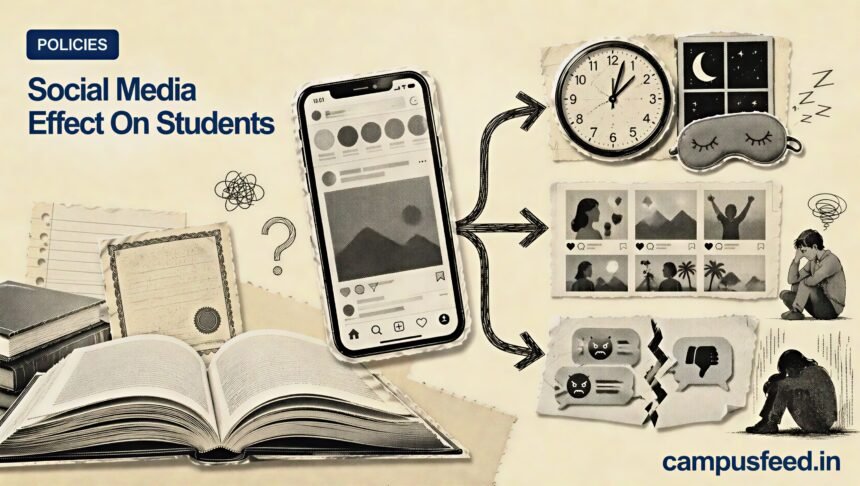
Social media harms student minds through three main pathways: lost sleep, constant social comparison, and cyberbullying. These effects hit young people during years when the brain is still forming.
Late-night scrolling cuts sleep, which weakens focus, memory, and mood the next day. Endless comparison with edited lives lowers self-worth and feeds a fear of missing out. Cyberbullying adds direct emotional injury that follows a student home from campus.
The Economic Survey 2025-26 named digital addiction for the first time, noting its real economic and social costs, and it recommended steps to cut screen time.
Key Data at a Glance
The scale of student exposure in India is large and rising fast. The table below shows the core figures shaping this debate.
| Indicator | Figure | Source |
|---|---|---|
| Social media users in India | 500 million (Sept 2025) | Economic Survey 2025-26 |
| Children aged 8 to 16 using internet daily | 65 percent | NCPCR, 2025 |
| Anxiety among surveyed medical students | 41.9 percent | Indian Journal of Psychiatry, 2024 |
| Depression among surveyed medical students | 37.6 percent | Indian Journal of Psychiatry, 2024 |
| Recommended daily recreational screen limit | Under 2 hours | IAP guidelines, 2022 |
The standout figure is daily internet use by two in three children aged 8 to 16, which shows how early exposure now begins.
Turn Your Achievements Into Stories That Students Actually Read
Feature admissions, placements, rankings, events, research initiatives, achievements, and institutional milestones before a highly engaged education-focused audience.
About the Indian Academy of Pediatrics
The Indian Academy of Pediatrics (IAP) is the national body of child health doctors in India, formed in 1963. It sets clinical guidance for children and adolescents. Its 2022 digital wellness guidelines review evidence on screen harm and recommend age-based limits. You can read the guidance on the official IAP website.
How Is India Responding?
India is moving from advice toward active rules on student screen use. The response now spans central policy and state action.
Maharashtra set up an expert task force on the impact of social media on minors, and Karnataka is preparing stricter rules for younger students. Several states are weighing limits on mobile phones in schools. The full policy context sits in the Economic Survey 2025-26, which frames digital addiction as a governance issue. These steps signal a shift from soft guidance to firmer control of children’s digital environments.
What This Means For You
If you are a student
Notice how you feel after long scrolling sessions, since low mood or tiredness is a real signal. Try a fixed daily limit and keep your phone out of the bedroom at night. Better sleep alone can lift focus, mood, and exam performance within weeks.
If you are a parent
Talk with your child about online life without judging or banning it outright. Agree on screen limits together, and model the same habits yourself. Watch for sleep loss, withdrawal, or mood changes, which are early warning signs worth a calm conversation.
If you are a school principal or teacher
Build digital literacy into the timetable, not just device rules. Teach students how comparison and algorithms shape feelings and time. Clear, consistent phone policies during class hours protect focus and reduce peer pressure across the campus.
What Is Next
Expect the debate to sharpen through the 2026-27 academic year as more states test phone rules. Watch for these near-term markers:
- State-level decisions on phones in schools in Maharashtra and Karnataka
- Fresh screen-time and wellbeing guidance from health and education bodies
- School-level digital literacy programmes rolling out in more districts
What screen habit will you change first at home or on campus?
Frequently Asked Questions
Last updated: August 13, 2026 at 11:30 IST
Disclaimer: This article is for general informational purposes only and is based on publicly available information at the time of publishing. Screen-time guidance, research findings, and policy details can change without notice. If you or a student is struggling with anxiety, low mood, or sleep problems, please consult a qualified doctor or counsellor. Always verify the latest guidance from official sources such as the Indian Academy of Pediatrics or your state education department before taking any action. CampusFeed and its authors are not responsible for decisions made based on this article. This is not medical, legal, or career advice. Please consult a qualified professional for individual guidance.
Written by CampusFeed Desk. Published: August 13, 2026. Updated: August 13, 2026. Have a tip or correction? Write to us at editorial@campusfeed.in.