

Quick Facts
- Bankim Chandra Chatterjee wrote Vande Mataram on November 7, 1875, in Bengal.
- The poem appeared in his novel Anandamath in 1882 and spread nationwide.
- India adopted its first two stanzas as the national song in 1937.
In This Article
The history behind Vande Mataram begins on November 7, 1875, when Bengali writer Bankim Chandra Chatterjee composed the poem that would later become India’s national song.
The song praises the motherland as a figure of strength and devotion. It first reached readers through a literary journal, then a famous novel, and finally became a rallying cry against British rule, according to the Press Information Bureau.
Key Takeaways
- Vande Mataram started as a standalone poem in 1875, years before the novel Anandamath appeared in 1882.
- Rabindranath Tagore first sang the song at the 1896 Congress session, giving it a national stage.
- The national song and the national anthem, Jana Gana Mana, hold equal status under India’s Constituent Assembly.
CampusFeed Take
The history behind Vande Mataram matters because it shows how literature can shape a nation’s identity. Students preparing for board exams and competitive tests should note that the song’s story blends language, freedom history, and civics in one topic. Watch for this theme in general knowledge sections, where questions on the author, the year, and the novel appear often. As India moves through the song’s 150th year in 2026, expect fresh school activities, quiz rounds, and essay prompts built around it. Learning the real timeline now will help you answer with confidence later. By CampusFeed Desk.
Who Wrote Vande Mataram and When?
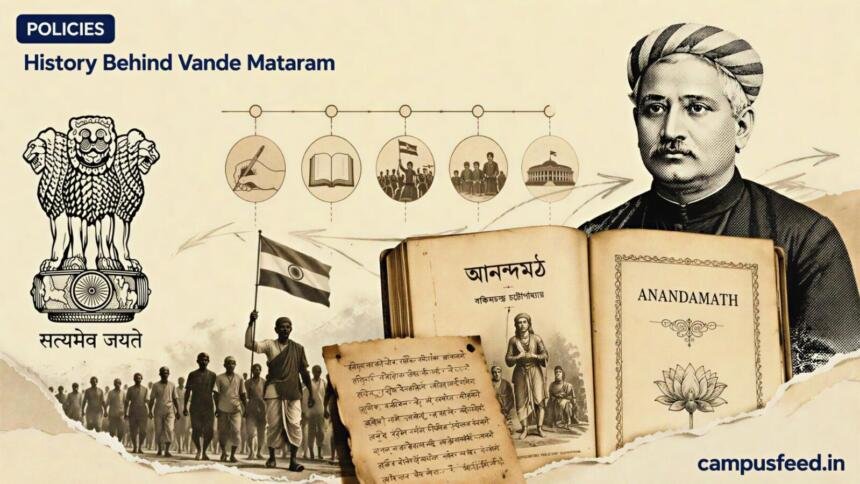
Vande Mataram was written by Bankim Chandra Chatterjee, one of the most important Bengali writers of the 19th century. He composed the poem on November 7, 1875, according to the official record from Newsonair.
Chatterjee was born in 1838 and worked as a government officer under British rule. He wrote his first novel, Durgeshnandini, in 1865. The song first appeared in his journal Bangadarshan and later in his novel Anandamath, published in 1882. The phrase Vande Mataram means “Mother, I bow to thee.”
Key Dates in the Song’s Journey
The history behind Vande Mataram unfolds across several key years, from its writing in 1875 to its adoption in 1950. The table below lists the main milestones.
| Year | Milestone |
|---|---|
| 1875 | Bankim Chandra Chatterjee writes the poem on November 7. |
| 1882 | The song appears in his novel Anandamath. |
| 1896 | Rabindranath Tagore sings it at the Congress session in Calcutta. |
| 1905 | Vande Mataram is used as a political slogan on August 7. |
| 1937 | The Congress adopts the first two stanzas as the national song. |
| 1950 | The Constituent Assembly gives it equal status with the national anthem. |
The most striking point is the 75-year gap between the poem’s writing in 1875 and its formal recognition in 1950. The song lived through the entire freedom struggle before it gained official status.
About Bankim Chandra Chatterjee
Bankim Chandra Chatterjee (1838 to 1894) was a Bengali novelist, poet, and essayist who shaped modern Indian literature. He worked as a colonial-era bureaucrat while writing landmark novels, including Anandamath (1882), Durgeshnandini (1865), and Devi Chaudhurani (1884). His work gave voice to an emerging sense of Indian nationalism and remains part of school and college study across the country today, per the Press Information Bureau.
How Did the Song Enter the Freedom Struggle?
Vande Mataram entered the freedom struggle as a slogan of unity and resistance against British rule. Rabindranath Tagore first sang it at the 1896 Congress session in Calcutta, and it soon spread to meetings, processions, and protests, as reported by Newsonair.
After the 1905 partition of Bengal, the words became a cry of protest across the region. Freedom fighters chanted the song in defiance of colonial authority. It became a symbol of love for the motherland during the independence movement.
Why Were Only Two Stanzas Adopted?
Only the first two stanzas of Vande Mataram were adopted as the national song because they focus on the motherland in broad, poetic terms. In 1937, the Congress Working Committee took this decision after some groups objected to religious imagery in the later stanzas, according to Britannica.
Turn Your Achievements Into Stories That Students Actually Read
Feature admissions, placements, rankings, events, research initiatives, achievements, and institutional milestones before a highly engaged education-focused audience.
“Vande Mataram should be honoured equally with the national anthem, Jana Gana Mana,” declared Dr Rajendra Prasad, President of the Constituent Assembly, on January 24, 1950.
Records show that Rabindranath Tagore himself suggested keeping the first two stanzas. The Constituent Assembly later confirmed the song’s equal standing with the national anthem in 1950.
What This Means For You
If you are a student
You should know the three core facts: the author is Bankim Chandra Chatterjee, the writing year is 1875, and the novel is Anandamath. These points appear often in general knowledge papers and quiz rounds. Knowing the 1896, 1937, and 1950 dates will help you answer follow-up questions with ease.
If you are a parent
You can use this topic to connect your child with India’s freedom history in a simple way. The story links language, literature, and civics, which supports school learning. Encourage your child to learn the timeline rather than just the song’s opening lines.
If you are a school principal or teacher
You can build assembly talks, quiz contests, or essay tasks around the song’s 150-year story in 2026. Focus on the verified timeline and the author’s life. This helps students see history as a living subject rather than a list of dates.
What Is Next
India is marking 150 years of Vande Mataram through 2026, so expect more school programmes, quizzes, and essay prompts on the topic. Upcoming study points to remember include the author (1875), the novel (1882), and the adoption year (1937). Which part of the song’s journey surprised you the most?
Frequently Asked Questions
Last updated: August 16, 2026 at 14:30 IST
Disclaimer: This article is for general informational purposes only and is based on publicly available information at the time of publishing. Historical dates, records, and official details can be revised or reinterpreted over time. Always verify the latest information from the official portal of the relevant body (Ministry of Education, Press Information Bureau) before taking any action. CampusFeed and its authors are not responsible for decisions made based on this article. This is not legal, financial, or career advice. Please consult a qualified professional for individual guidance.
Written by CampusFeed Desk. Published: August 16, 2026. Updated: August 16, 2026. Have a tip or correction? Write to us at editorial@campusfeed.in.