

Quick Facts
- In 2026, 78 percent of large organisations use some form of AI screening, up from 45 percent in 2023.
- LinkedIn found 84 percent of Indian professionals feel unprepared for AI-driven hiring, even as 72 percent seek new roles.
- Skills now matter more than degrees, so demonstrating real ability is the clearest way to get shortlisted.
In This Article
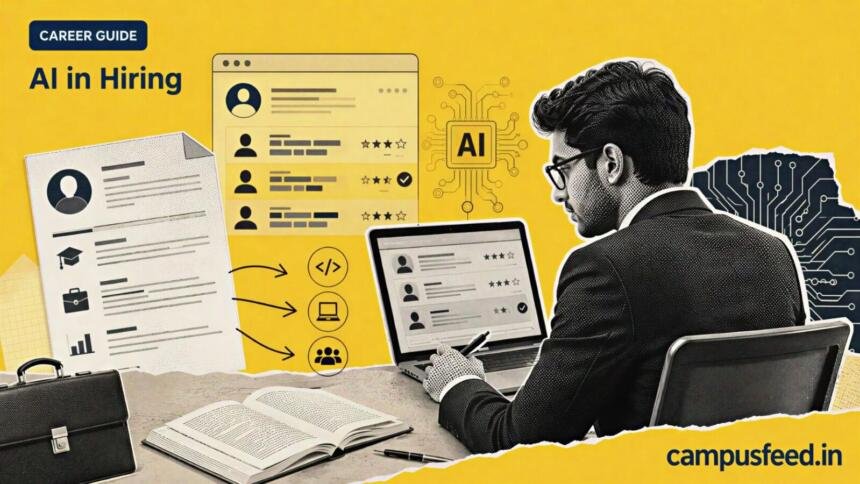
AI in hiring now decides which candidates reach a human recruiter, by screening resumes, scoring skills, and ranking applicants before any interview begins. This shift is reshaping how jobs are won and lost across India.
The change is fast and real. In 2026, 78 percent of large organisations use some form of AI screening, up from 45 percent in 2023 (industry screening data). For students and job seekers, this means a machine often reviews your application first, so understanding the new rules matters more than ever.
Key Takeaways
- AI in hiring filters and ranks candidates first, so a clear, skills-focused resume is your entry ticket.
- Employers in India now hire for demonstrated skills over degrees, rewarding candidates who can prove real ability.
- AI is a tool, not the final judge, since humans still make the last call on most roles.
CampusFeed Take
The real story of AI in hiring is not job loss, it is a widening gap between candidates who can prove skills and those who only list them. Students leaving college in 2026 and 2027 should watch this closest, because AI screening rewards evidence like projects, certifications, and measurable results, not vague claims. The smart move now is to build a portfolio a machine can read and a human can respect. Over the next two years, as more Indian firms adopt agentic screening tools, the candidates who treat their resume as proof, not paperwork, will move fastest through the funnel. By CampusFeed Desk.
What Is AI in Hiring?
AI in hiring is the use of machine learning tools to screen resumes, rank candidates, and predict job fit automatically. These systems read applications, match them to role requirements, and shortlist the strongest matches before a recruiter steps in.
Manual resume screening once took about 23 hours per hire, but AI screening cuts this to under one hour (industry screening data). According to LinkedIn research, applicants per open role in India have more than doubled since early 2022, which is why employers now lean on AI to manage the flood.
How AI in Hiring Decides Who Gets Shortlisted
AI in hiring decides shortlists by scoring each candidate against the skills, keywords, and experience a role demands. The tool ranks applicants, and only the top matches usually reach a human recruiter.
Most systems check three things: whether your skills match the job, whether your experience is relevant, and whether your resume is clear and readable. Video interview tools may also assess speech and responses. Because a machine reads first, a resume packed with real, named skills and measurable results scores higher than one full of vague words.
Key Data on AI in Hiring in India
AI in hiring has moved from a pilot idea to standard practice across Indian companies in just three years. The table below shows the scale of this change.
| Metric | Figure | Source |
|---|---|---|
| Large organisations using AI screening (2026) | 78 percent (up from 45 percent in 2023) | Industry screening data |
| Indian professionals feeling unprepared for AI-driven hiring | 84 percent | LinkedIn research |
| Indian recruiters finding it harder to source talent | 74 percent | LinkedIn research |
| Indian job seekers planning to use AI in their search | 94 percent | LinkedIn research |
| Indian job seekers who see AI as a friend, not a threat | 86 percent | Naukri report |
The most striking figure is the gap between fear and use: 84 percent of Indian professionals feel unprepared, yet 94 percent plan to use AI tools to job hunt (LinkedIn research). Anxiety and adoption are rising together.
About LinkedIn
LinkedIn is the world’s largest professional network, connecting job seekers, recruiters, and companies globally. Owned by Microsoft, it runs regular research on hiring trends and publishes its India Jobs on the Rise report, which tracks the fastest-growing roles in the country. Its 2026 data has become a widely cited reference point for how AI is reshaping recruitment across India. You can read its findings on the official LinkedIn newsroom.
What Does AI in Hiring Mean for Job Seekers in India?
AI in hiring in India means a machine often reviews your application before any person does, so skills and clarity now decide early success. The mood is anxious but adaptive.
Turn Your Achievements Into Stories That Students Actually Read
Feature admissions, placements, rankings, events, research initiatives, achievements, and institutional milestones before a highly engaged education-focused audience.
LinkedIn found that 77 percent of Indian professionals say hiring now has too many stages, and 66 percent call it impersonal, with slow feedback adding stress. At the same time, employers have shifted from degree-based screening toward skills-first hiring, rewarding candidates who show real ability. According to the Naukri AI jobs report, 86 percent of Indian job seekers now view AI as a friend, and AI-skilled roles command median salaries around 53 percent higher than non-AI roles.
What This Means For You
If you are a student
You are entering a market where AI in hiring reads your resume first. Build proof of skills through projects, internships, and certifications. Learn at least one AI or data tool, since AI-skilled roles pay far more and are growing fastest. Treat your resume as evidence a machine can scan and a human can trust.
If you are a parent
Your child’s degree still matters, but it is no longer enough on its own. Encourage skill-building, real projects, and internships alongside academics. Support learning of digital and AI tools, because employers now hire for demonstrated ability. A focused, skills-first approach helps your child stand out in AI screening.
If you are a college principal or teacher
Your students face AI-driven shortlisting the moment they apply. Add skills training, project work, and AI literacy to your programmes. Help students build portfolios and practise for AI-based interviews. Institutions that teach demonstrable skills will see stronger placement outcomes as employers move away from degree-only hiring.
What Is Next
AI in hiring will deepen through 2026 and 2027 as more Indian firms adopt agentic screening and AI interview tools. Watch for these shifts:
- Wider use of AI video interviews across campus and entry-level hiring
- Stronger demand for AI, data, and cybersecurity skills
- More employers publishing how their AI screening works
The candidates who prepare early will hold the edge. Are you building skills a machine can measure and a recruiter can respect?
Frequently Asked Questions
Last updated: August 24, 2026 at 14:30 IST
Disclaimer: This article is for general informational purposes only and is based on publicly available information at the time of publishing. Hiring practices, screening tools, eligibility criteria, and salary details can change without notice. Always verify the latest information from official sources before taking any action. CampusFeed and its authors are not responsible for decisions made based on this article. This is not legal, financial, or career advice. Please consult a qualified professional for individual guidance.
Written by CampusFeed Desk. Published: August 24, 2026. Updated: August 24, 2026. Have a tip or correction? Write to us at editorial@campusfeed.in.