

Quick Facts
- Indian colleges and educators are trying new ways to understand Gen Z, born roughly 1997 to 2012.
- Delhi University now offers a 4-credit elective on modern relationships, run by its Department of Psychology.
- The Viksit Bharat Young Leaders Dialogue 2026 drew over 50 lakh youth, per the government.
In This Article
Across India, colleges, teachers, and policymakers are trying hard to understand Gen Z, the young students who now fill classrooms and hostels.
Gen Z means people born roughly between 1997 and 2012. This group grew up with smartphones, social media, and instant information. Their way of speaking, learning, and reacting to news often differs from older generations. That gap is now shaping real changes in course design, campus events, and youth policy.
Key Takeaways
- Efforts to understand Gen Z now show up in new electives, open forums, and structured youth dialogues.
- Delhi University added an emotional-skills elective, signalling that campuses see student wellbeing as core learning.
- Government youth forums invite lakhs of students to share ideas, giving Gen Z a direct policy voice.
CampusFeed Take
The real story is not that adults find Gen Z hard to read. It is that Indian campuses have started treating that gap as a design problem, not a complaint. When a university adds an elective on relationships, or the government builds a youth forum with lakhs of entries, both are admitting the same thing: old formats no longer reach young students well. Watch college administrators and curriculum boards closest over 2026-27. The institutions that build regular listening channels, not one-off events, will hold student trust as the 2027 admission cycles begin. By Avinash.
Who Is Gen Z On Campus Today?
Gen Z refers to the generation born roughly between 1997 and 2012, now the largest student group on Indian campuses. Members reached their teens with constant internet access, short-video platforms, and online communities. This shaped how they read news, form opinions, and question authority.
To understand Gen Z, educators note a few common patterns. Many students prefer visual and short content over long lectures. Many care deeply about mental health, identity, and fairness. Many also question rules rather than accept them silently. These traits are neither good nor bad. They simply ask for a different teaching and communication style than earlier batches needed.
What Are Campuses Doing To Understand Gen Z?
Colleges are responding to Gen Z with new courses, open conversations, and structured youth forums rather than only stricter rules.
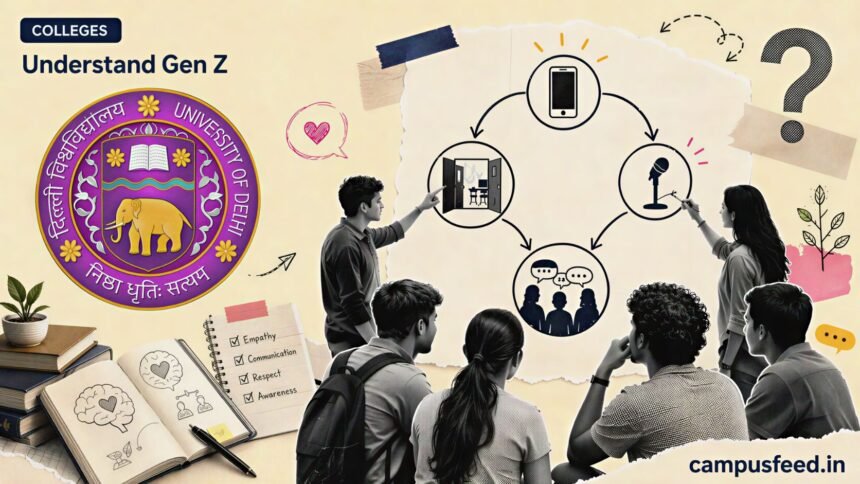
Delhi University offers one clear example. Its Department of Psychology introduced a general elective named “Negotiating Intimate Relationships” from the 2025-26 session. The 4-credit elective is open to undergraduates across streams and covers emotional skills, healthy relationships, and warning signs of harm. You can review official course structures on the University of Delhi website. The course treats emotional literacy as a subject worth formal teaching, not an afterthought.
Government forums add a second channel. To understand Gen Z at scale, the state has built platforms where students speak directly to leaders and share ideas on national issues.
About Delhi University
The University of Delhi (DU) is a central university established in 1922, governed by an Act of Parliament and funded largely through the University Grants Commission. It runs dozens of colleges across the capital and teaches lakhs of undergraduate and postgraduate students each year. DU holds strong national rankings and remains one of India’s most sought after study destinations for school leavers.
Key Efforts To Understand Gen Z
Several recent efforts show how institutions and the government are trying to understand Gen Z in structured ways. The table below lists verified examples and their scale.
| Effort | Who Runs It | Focus | Scale / Detail |
|---|---|---|---|
| Negotiating Intimate Relationships elective | Delhi University, Department of Psychology | Emotional skills, healthy relationships | 4-credit general elective, from 2025-26 |
| Viksit Bharat Young Leaders Dialogue 2026 | Ministry of Youth Affairs and Sports | Youth ideas on national development | Over 50 lakh youth engaged, per PIB |
| National Championship stage | Ministry of Youth Affairs and Sports | Final presentations across 10 themes | 10 teams presented before the PM |
| Essay challenge stage | Ministry of Youth Affairs and Sports | Written youth perspectives | 39,463 essay entries, per the Ministry |
The most striking figure is participation. Over 50 lakh young people joined the 2026 youth dialogue at various levels, per the government, which shows strong appetite among Gen Z for a direct say.
Turn Your Achievements Into Stories That Students Actually Read
Feature admissions, placements, rankings, events, research initiatives, achievements, and institutional milestones before a highly engaged education-focused audience.
How Does The Government Reach Gen Z Directly?
The government reaches Gen Z through structured youth dialogues that invite ideas and end with direct interaction with national leaders. The Viksit Bharat Young Leaders Dialogue 2026 ran from January 9 to 12, 2026, at Bharat Mandapam in New Delhi. Selected participants presented across ten themes, including education, technology, and governance, per the Press Information Bureau.
“Youth engagement on such a massive scale is unprecedented,” Prime Minister Narendra Modi said at the concluding session, per an official release.
Full details of the dialogue appear in the government’s own record on the Press Information Bureau portal and the Ministry of Youth Affairs website. These primary sources confirm the dates, stages, and scale.
What This Means For You
If you are a student
You now have more spaces to be heard, from new electives to national youth forums. Look for open electives on wellbeing or communication at your college. Watch for youth dialogue registrations, which let you share ideas directly. These channels reward students who prepare clear, practical suggestions.
If you are a parent
Campuses are adding emotional and life-skill learning, not removing academics. If your child seems anxious about relationships or peer pressure, an elective like Delhi University’s may help. Ask the college what wellbeing support and student forums it offers before admission. These features now signal a caring, modern campus.
If you are a school principal or teacher
Understanding Gen Z means adjusting how you communicate, not just what you teach. Short, visual, and honest formats work better than long notices. Build small listening channels, such as class councils or feedback boxes. Students trust institutions that ask for their views and then act on them.
If you run a college or university
Regular listening beats one-off events. Consider electives on wellbeing, structured student councils, and clear feedback loops. You can study official curriculum models on the University of Delhi website. Institutions that build steady dialogue will hold stronger student trust through future admission cycles.
If you work in policy or media
Youth participation data is now large and public. Over 50 lakh youth joined the 2026 dialogue, per government records. Track whether such forums lead to lasting policy, not only events. Verified participation figures give you a solid base for fair, evidence-led coverage.
What Is Next
Expect more colleges to test wellbeing electives and student councils through 2026-27. Watch for the next youth dialogue cycle and fresh curriculum decisions by university academic councils. Key things to follow next:
- New elective approvals in the 2026-27 academic year
- The next edition of the national youth dialogue
Which change would help your campus most: better courses, or a stronger student voice?
Frequently Asked Questions
Last updated: August 03, 2026 at 09:15 IST
Last verified: August 03, 2026
Disclaimer: This article is for general informational purposes only and is based on publicly available information at the time of publishing. Course details, elective availability, eligibility criteria, forum dates, and participation figures can change without notice. Always verify the latest information from the official portal of the relevant body, such as the University of Delhi, UGC, or the Ministry of Youth Affairs, before taking any action. CampusFeed and its authors are not responsible for decisions made based on this article. This is not legal, financial, or career advice. Please consult a qualified professional for individual guidance.
Written by Avinash. Published: August 03, 2026. Updated: August 03, 2026. Have a tip or correction? Write to us at editorial@campusfeed.in.