

In 30 Seconds
The date: MeitY launched the DEPA for AI Training handbook on October 31, 2026.
What it is: A guide to share data for AI training, not a law or a live portal.
Who it affects: Startups, researchers and college labs that need datasets to train AI models.
Still unknown: When any usable portal opens, since the document is a draft.
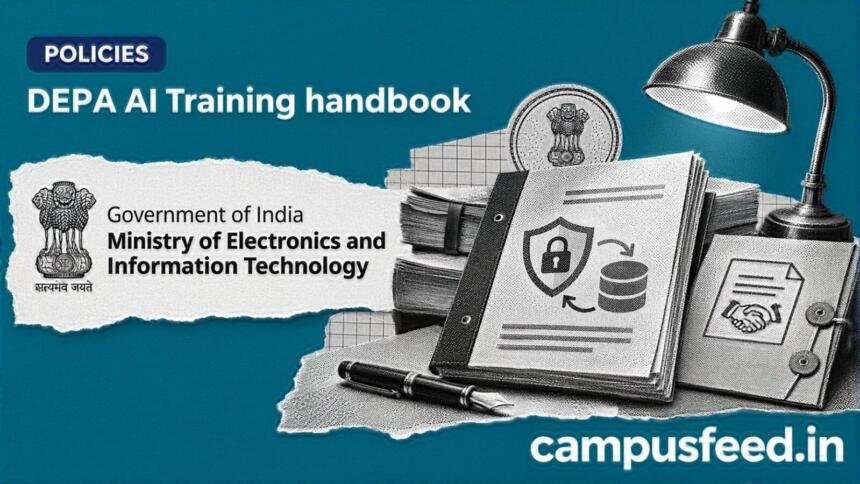
The Ministry of Electronics and Information Technology launched a handbook on October 31, 2026. It lets startups, researchers and colleges share data to train AI models. It is a guide, not a law, and no portal has opened yet.
The ministry calls it the DEPA for AI Training handbook. S. Krishnan, Secretary of the ministry, unveiled it at a roundtable in Bengaluru. The think tank iSPIRT Foundation helped build it.
The document is marked “Draft for Discussion”. DEPA stands for Data Empowerment and Protection Architecture. The Ministry of Electronics and Information Technology is the central body that frames India’s technology rules.
What is the DEPA AI Training handbook?
The DEPA AI Training handbook is a techno-legal framework to share data for AI training while the owner keeps control. A researcher cannot use the framework today. The handbook sets the rules first.
Who can use the framework, and who gives the data?
The handbook names two sides. Training Data Providers hold the data: banks, hospitals and government agencies. Training Data Consumers want the data: startups, enterprises, researchers and individuals.
A college lab that needs medical scans to train a model is a Consumer. The data never changes hands. The model trains inside a secure environment. The raw records stay with the provider.
How does the data stay private?
Three tools make the handbook work. Digital contracts set what the data may be used for. Confidential clean rooms run the training in a sealed space. Differential privacy adds statistical noise so no single person can be identified.
How does this link to the DPDP Act?
The framework must follow the Digital Personal Data Protection Act. That is India’s data privacy law, passed in 2023. The handbook ties access to consent and to a stated purpose.
A Consumer cannot take a dataset and reuse it for something else. DEPA is not new. Its first use was the Account Aggregator system for sharing bank data with consent. The AI Training handbook extends the same idea to AI models.
Which data platforms does it connect to?
The handbook links to three public data platforms. These are AI Kosh, API Setu and the Open Government Data platform. Each already holds datasets the government has released.
Turn Your Achievements Into Stories That Students Actually Read
Feature admissions, placements, rankings, events, research initiatives, achievements, and institutional milestones before a highly engaged education-focused audience.
| What | Detail | Status |
|---|---|---|
| Handbook launched | October 31, 2026, Bengaluru | Done |
| Document stage | Draft for Discussion | Open |
| Usable portal for a researcher | Not announced | Awaited |
The handbook is live. A portal a student could log into is not.
Can a college student use this for a project right now?
Is the DEPA framework usable for a student research project in 2026?
No. The DEPA AI Training handbook is a draft, so there is no portal a student can register on yet. The idea is that a college lab could one day request a hospital or bank dataset, train a model on it in a sealed environment, and never see the raw records. For now, watch for the final version.
Policy analysts have questioned earlier versions of DEPA for Training over its consent model. They ask whether user consent is strong enough under the 2023 Act. Krishnan called the framework India’s contribution to global science diplomacy. The draft stage means the rules can still change before any portal goes live.
Frequently Asked Questions
What is the DEPA for AI Training handbook?
Who launched the DEPA AI Training handbook?
Can researchers use the DEPA framework now?
How does the DEPA handbook protect privacy?
How does the handbook relate to the DPDP Act?
Last verified: November 3, 2026
Disclaimer: Dates, rules and portal timelines can change without notice. Check with the Ministry of Electronics and Information Technology before you act.