

Quick Facts
- The ABC ID is a free 12-digit account under NEP 2020, needed for university admission and exams.
- Over 26.30 crore APAAR IDs are now generated, one of the world’s largest student identity systems (PIB).
- First-year students should create it via DigiLocker before their own university registration window closes.
In This Article
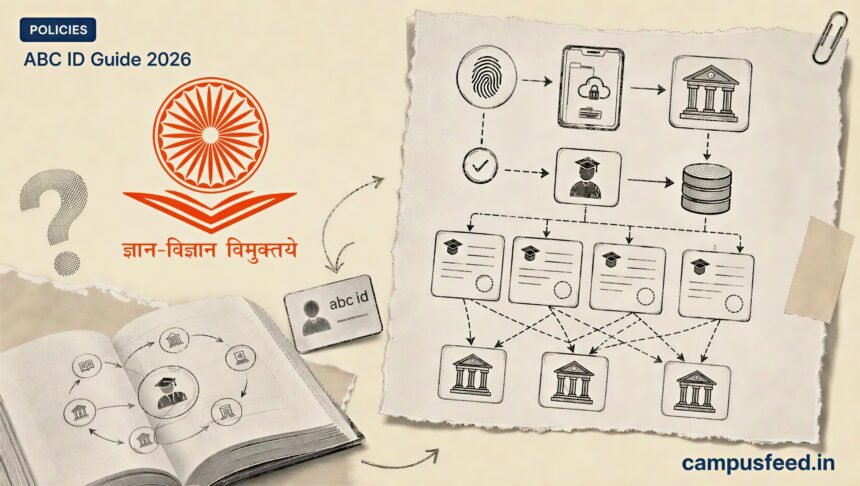
This ABC ID guide 2026 explains a simple truth: every first-year university student in India now needs a free 12-digit Academic Bank of Credits account to complete admission, register for semesters, and later collect their degree.
The Academic Bank of Credits (ABC) was introduced under the National Education Policy (NEP) 2020. It works like a bank account, but it stores your college credits instead of money. The University Grants Commission (UGC) has made it a standard requirement across higher education institutions, and your ID stays valid for seven years.
Key Takeaways
- The ABC ID is free, takes a few minutes on DigiLocker, and needs an Aadhaar-linked mobile number.
- Most universities now ask for this ID during admission and semester registration, so create it early.
- Your credits stay accessible for seven years, letting you move between colleges without losing academic progress.
CampusFeed Take
The smart move is to treat the ABC ID as a one-time setup, not a last-minute panic. Students who create it during admission avoid the exam-form blockages that hit unprepared candidates at deadline time. First-year students should watch closest, because your ID becomes the spine of every future credit transfer, elective from SWAYAM, and multiple entry-exit option NEP 2020 promises. Expect universities to tighten verification as the ABC ecosystem matures through 2026-27, so a clean, Aadhaar-verified account created today saves real trouble later. Set it up once, save the number safely, and forget the stress. By Harshvardhan Jain.
Key Details at a Glance
The ABC ID is a free digital account created through DigiLocker using Aadhaar verification. The table below covers the details a first-year student needs before starting.
| Detail | Information |
|---|---|
| What it is | 12-digit Academic Bank of Credits ID (NEP 2020) |
| Official portal | abc.gov.in and DigiLocker |
| Cost | Free of charge |
| Documents needed | Aadhaar card and Aadhaar-linked mobile number |
| Credit validity | 7 years, per UGC norms |
| Regulator | University Grants Commission (UGC), Ministry of Education |
The most useful point for freshers: the process is free and takes only a few minutes if your Aadhaar is already linked to your mobile number.
About the Academic Bank of Credits
The Academic Bank of Credits (ABC) is a national digital repository established by the Ministry of Education under UGC guidelines. Launched as part of NEP 2020, it stores, transfers, and redeems academic credits earned across recognised higher education institutions. As of mid-2026, over 26.30 crore APAAR IDs have been generated and 388 universities have adopted the framework, according to the Press Information Bureau (PIB). You can learn more on the University Grants Commission official site.
How Do First-Year Students Create It?
First-year students create an ABC ID for free through DigiLocker using Aadhaar-based verification. The account links directly to your student identity and stores every credit your college uploads.
Keep your Aadhaar card ready and make sure your Aadhaar-linked mobile number is active, because the system sends OTPs for verification. Open the official ABC portal or use the DigiLocker Education tab, sign in with your Aadhaar-linked number, select your institution, and generate the ID. Save the 12-digit number safely, as your university will ask for it during registration and exam form filling.
What This Means For You
If you are a student
Create your ABC ID as soon as you confirm admission, not on the exam-form deadline. Many universities block registration and June exam forms until your 12-digit ID is verified. Setting it up early through DigiLocker keeps your admission and semester process smooth, and your credits stay safe for seven years.
If you are a parent
Help your child keep their Aadhaar linked to an active mobile number, since every step uses OTP verification. The ABC ID is completely free, so ignore any website or agent asking for a fee. You can verify the correct process on the Ministry of Education website before your child begins.
If you are a school principal or teacher
Guiding outgoing Class 12 students to create their ABC ID early smooths their college admission. A short session on DigiLocker registration and Aadhaar linking saves your students from deadline-time stress once they reach university.
Turn Your Achievements Into Stories That Students Actually Read
Feature admissions, placements, rankings, events, research initiatives, achievements, and institutional milestones before a highly engaged education-focused audience.
What Is Next
Once your ABC ID is ready, your university connects it during registration and begins uploading your credits each semester. Watch for your institution’s official registration notice, since deadlines vary by university and course. The next milestone is your first semester result, which should reflect in your ABC account. Have you already created your ABC ID, or is it still on your to-do list?
Frequently Asked Questions
Last updated: August 07, 2026 at 10:15 IST
Last verified: August 07, 2026
Disclaimer: This article is for general informational purposes only and is based on publicly available information at the time of publishing. Exam dates, cutoffs, fees, deadlines, eligibility criteria, and scholarship details can change without notice. Always verify the latest information from the official portal of UGC, the Ministry of Education, or your university before taking any action. CampusFeed and its authors are not responsible for decisions made based on this article. This is not legal, financial, or career advice. Please consult a qualified professional for individual guidance.
Written by Harshvardhan Jain. Published: August 07, 2026. Updated: August 07, 2026. Have a tip or correction? Write to us at editorial@campusfeed.in.