

Quick Facts
- CBSE says Class 7 to 9 students with two foreign languages can continue till Class 10.
- The two Indian languages rule now applies prospectively from Class 6, not retrospectively.
- Formal orders are expected shortly, so schools and parents should watch the official CBSE site.
In This Article
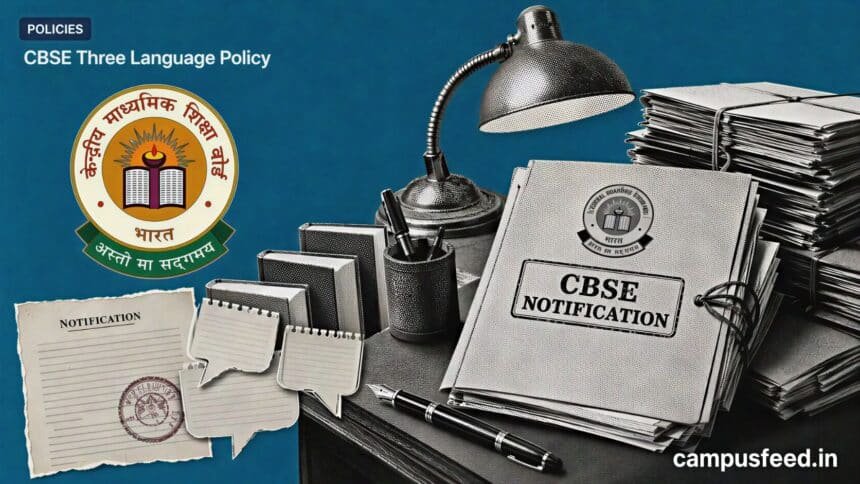
The CBSE Three Language Policy has been eased, and students currently in Classes 7, 8 and 9 who picked two foreign languages can now continue the same combination till Class 10.
The clarification came from sources in the Ministry of Education on Thursday, June 26, 2026, and follows weeks of worry among parents in big cities. The Central Board of Secondary Education (CBSE) confirmed that the rule needing at least two Indian languages will apply going forward from Class 6, not to students already midway through school.
Key Takeaways
- Students already in Classes 7 to 9 with two foreign languages face no forced mid-course subject switch.
- The two Indian languages requirement rolls out from Class 6, giving schools time to prepare teachers and books.
- The government says this is a clarification for clearer rollout, not a rollback of the language policy.
CampusFeed Take
The timing tells the real story. CBSE moved only after the Supreme Court declined a stay and parents in metro schools raised alarm, which means student pressure shaped the outcome here. The group to watch closest is Class 9 families in 2026-27, since they sit at the exact line between the old and new rules. The number that matters: of nearly 24 lakh Class 10 candidates each year, only about 30,000 choose foreign languages, so this protects a small but anxious group. Expect the formal CBSE order within weeks, and read it line by line before changing any subject choice. By Avinash.
Key Dates and Rule Changes at a Glance
The CBSE Three Language Policy sets out clear timelines for schools, students and parents. The table below lists the main dates and rules from the official CBSE circular and the latest Ministry clarification.
| Item | Detail |
|---|---|
| Policy start for Class 9 | July 1, 2026 (CBSE Circular Acad-33/2026, dated May 15, 2026) |
| Languages required | Three languages (R1, R2, R3), at least two native Indian languages |
| Class 7 to 9 with two foreign languages | Allowed to continue same combination till Class 10 (Ministry clarification) |
| Two Indian languages rule | Applies prospectively from Class 6, not retrospectively |
| Board exam for R3 | No board exam; R3 assessment is school-based and internal |
| School deadline (OASIS portal) | Update R3 offering for Classes 6 to 9 by June 30, 2026 |
The standout point is simple: the third language carries no board exam, so the change is about exposure to languages, not extra marks pressure.
About CBSE
The Central Board of Secondary Education (CBSE) is a national school board under the Ministry of Education, Government of India. It sets curriculum and conducts Class 10 and Class 12 exams for thousands of affiliated schools across India and abroad. Each year nearly 24 lakh students appear for its Class 10 examination, per the Ministry. CBSE issues academic circulars through its official site, cbseacademic.nic.in.
Who Does the CBSE Three Language Policy Apply To?
The CBSE Three Language Policy applies to students entering Class 9 from the 2026-27 academic session. Under CBSE Circular Acad-33/2026, these students must study three languages (R1, R2, R3), with at least two being native Indian languages, in line with the National Education Policy (NEP) 2020 and the National Curriculum Framework for School Education (NCF-SE) 2023.
“The requirement of studying at least two Indian languages as part of the three-language policy will be implemented prospectively from Class 6 and will not apply retrospectively to students already studying in Classes 7, 8 and 9,” sources in the Ministry of Education said.
In plain terms, new entrants from Class 6 step into the full rule. Students already in Classes 7 to 9 who chose two foreign languages keep their combination, which removes the fear of a sudden mid-school switch. The clarification followed a Supreme Court bench, led by Chief Justice Surya Kant, declining interim relief on petitions against the policy.
What This Means For You
If you are a student
If you are in Class 7, 8 or 9 with two foreign languages, you can continue the same subjects till Class 10. You do not have to drop a language or start a new one midway. Focus on your current subjects, and confirm your combination with your school once the formal CBSE order arrives.
If you are a parent
If you feared your child must suddenly learn an Indian language from scratch, this update should ease that worry for Classes 7 to 9. New rules apply from Class 6 onward. Keep an eye on the official CBSE notice and your school circular before making any subject decision for your child.
If you are a school principal or teacher
Update your R1, R2 and R3 language offerings for Classes 6 to 9 on the CBSE OASIS portal by June 30, 2026. Plan teacher availability for Indian language options at Class 6. Communicate the continuity rule clearly to Class 7 to 9 families to reduce anxiety during this transition.
Turn Your Achievements Into Stories That Students Actually Read
Feature admissions, placements, rankings, events, research initiatives, achievements, and institutional milestones before a highly engaged education-focused audience.
What Is Next
The formal CBSE order with the clarification is expected shortly. Watch these dates closely:
- June 30, 2026: Schools update R3 offerings on the OASIS portal.
- July 1, 2026: Three language rule starts for Class 9; Class 6 R3 textbooks in 19 scheduled languages become available.
Will your school offer enough Indian language options for new Class 6 students in time?
Frequently Asked Questions
Last updated: June 27, 2026 at 08:30 IST
Last verified: June 27, 2026
Disclaimer: This article is for general informational purposes only and is based on publicly available information at the time of publishing. Exam dates, cutoffs, fees, deadlines, eligibility criteria, and scholarship details can change without notice. Always verify the latest information from the official portal of CBSE before taking any action. CampusFeed and its authors are not responsible for decisions made based on this article. This is not legal, financial, or career advice. Please consult a qualified professional for individual guidance.
Written by Avinash. Published: June 27, 2026. Updated: June 27, 2026. Have a tip or correction? Write to us at editorial@campusfeed.in.