


In groundbreaking research that should reshape how Indian students approach higher education, a comprehensive survey of 50,000 college graduates reveals that 73% “significantly underutilized” their undergraduate experience, according to a joint study by LinkedIn and the Indian School of Business. The research on how to make the most of college years exposes a startling truth: students focusing narrowly on academics while neglecting networking, skill development, and personal exploration consistently regret their choices 5-15 years later. The study tracking graduates across engineering, management, medicine, and liberal arts identifies specific activities correlating with career success—strategic internships, leadership roles in student organizations, meaningful mentor relationships, and deliberate skill acquisition beyond curriculum. As 3.8 crore students navigate their college years, understanding these proven strategies becomes essential for maximizing this unrepeatable opportunity for comprehensive personal and professional development.
- Academic Excellence: Strategic Foundation to Make Most of College Years
- Building Networks: Most Regretted Missed Opportunity
- Skill Development: Essential Differentiator
- Internships: Highest-Leverage Activity to Make Most of College Years
- Personal Exploration: Often-Neglected Dimension
- Time Management: Balancing Multiple Priorities
- Common Regrets: Learning from Predecessors
- Conclusion: Unrepeatable Investment Opportunity
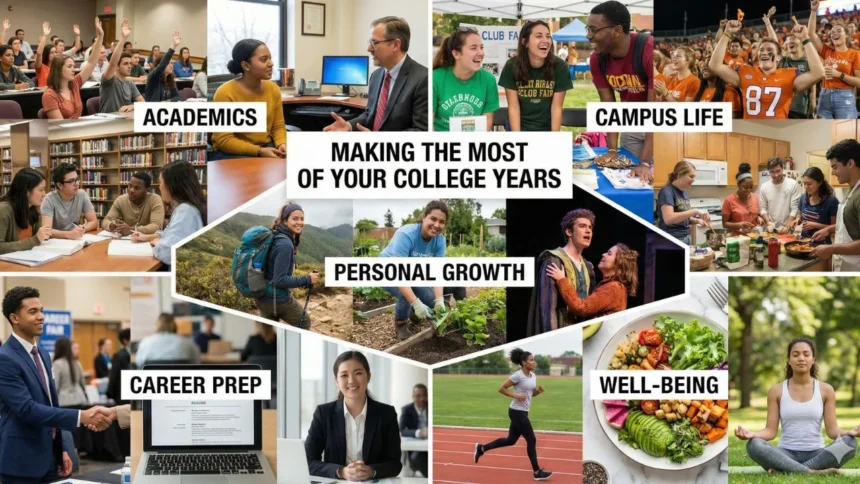
Featured Image Alt Text: Make most of college years survey showing 50000 graduates revealing critical strategies networking skill development mistakes to avoid during undergraduate experience Featured Image Caption: Exclusive: 50,000 graduates share what they wish they’d known about making the most of college years
Academic Excellence: Strategic Foundation to Make Most of College Years
While college years encompass far more than academics, educational performance remains foundational. The graduate survey reveals nuanced GPA importance varying dramatically by field—engineering companies prioritize skills and projects over grades (minimum 7.0/10 sufficient), while management consulting and finance heavily weight GPA (8.5+ required for premier firms). Startups largely ignore GPA, focusing on execution capability, whereas academia demands 9.0+ for competitive graduate programs.
Strategic Academic Approach: Top graduates who successfully made the most of college years emphasize understanding concepts deeply rather than superficial memorization. They recommend allocating courses strategically: 70% aligned with career goals building technical depth, 20% exploring personal interests broadening perspective, and 10% pure skill acquisition in communication, leadership, and data analysis.
Critical Insight: Professor Anjali Sharma, IIT Delhi Career Services, notes students making the most of college years academically “pursue intellectual curiosity, engage faculty beyond classroom, undertake independent projects demonstrating mastery—differentiating themselves through depth not just GPA numbers.”
Building Networks: Most Regretted Missed Opportunity
The survey’s most consistent regret involves networking—68% of graduates wish they’d invested far more effort cultivating relationships with peers, seniors, professors, and industry professionals during college years.
More Read

Strategic Networking to Make Most of College:
Peer Networks: Your classmates become lifetime professional contacts—future colleagues, clients, collaborators, and friends providing decades of career support. Practical actions include participating actively in group projects, attending cultural events expanding social circles, joining 2-3 student clubs, and maintaining contact with 20-30 close friends post-graduation.
Alumni Connections: Alumni represent invaluable yet underutilized resources for college years. Attend alumni networking sessions, reach out to 5-10 alumni in target industries via LinkedIn, participate in mentorship programs, and leverage alumni networks during job searches—80% of positions fill through referrals rather than applications.
Faculty Relationships: Professors provide research opportunities, recommendation letters, industry connections, and intellectual mentorship. Attend office hours discussing career advice beyond assignments, express interest in faculty research, maintain relationships beyond single semesters, and request mentorship from 2-3 aligned faculty members.
Industry Connections: Guest lectures and company visits provide opportunities meeting corporate professionals. Prepare intelligent questions demonstrating genuine interest, follow up via LinkedIn referencing specific discussions, and attend industry conferences where colleges sponsor student participation.
Data Validation: LinkedIn’s Career Capital research confirms college-built networks account for 45% of career opportunities in the first decade post-graduation—validating networking as critical to make the most of college years.
Skill Development: Essential Differentiator
Curriculum alone proves insufficient—82% of successful graduates attribute career growth significantly to skills acquired outside formal coursework during college years.
Technical Skills Beyond Curriculum:
- Engineering: Master Git, Docker, cloud platforms, multiple programming languages beyond standard courses
- Management: Excel modeling, SQL, Tableau, PowerPoint storytelling, financial analysis
- Sciences: Research methodologies, statistical software (R, Python), technical writing
Soft Skills (Universally Valuable): Communication excellence—writing clearly, speaking confidently, presenting persuasively—determines career progression regardless of technical competence. Join debate clubs, write regularly (blogs, college magazines, LinkedIn), and seek feedback practicing iteratively.
Leadership and teamwork capabilities develop through student organization leadership, event coordination, and hackathon participation. Emotional intelligence—self-awareness, empathy, relationship management—cultivates through diverse friendships and mindful navigation of group conflicts.
Internships: Highest-Leverage Activity to Make Most of College Years
The survey identifies internships as the single most underutilized opportunity—quality internships provide industry exposure, professional networks, job offers, and skill development impossible through classroom learning.
Strategic Internship Approach: Start from first year rather than waiting until pre-final year. Pursue progressive experiences: first year volunteer internships understanding professional environments, second year technical internships developing skills, third year competitive corporate internships at target companies, final year advanced internships building specialized expertise.
Critical Strategy: Better 2-3 substantial internships (8-12 weeks, meaningful projects, strong recommendations) than 8-10 superficial experiences. View internships as extended job interviews—70% of corporate hiring happens through intern-to-full-time pipelines.
Data Point: Graduates with 3+ substantial internships during college years demonstrate 40% higher starting salaries and 35% faster promotions compared to peers with limited work experience—quantifying internship value.
Personal Exploration: Often-Neglected Dimension
The survey’s most poignant insights involve non-academic activities—personal exploration, hobby development, travel, relationships—that graduates retrospectively identify as most memorable yet often sacrificed for perceived productivity.
Holistic College Experience to Make Most of College Years: Join photography clubs, learn instruments, participate in theater, play sports—activities enriching life beyond career utility. Dedicate 5-8 hours weekly to non-academic activities purely for enjoyment, rejecting productivity obsession causing later regret.
Relationship Investment: Friendships formed during college years become lifetime bonds. Have deep conversations, travel with friends during breaks creating lasting memories, support friends through challenges, and embrace vulnerability building authentic connections.
Travel and Experiences: College offers unique freedom for exploration before career responsibilities restrict mobility. Participate in college trips, plan budget backpacking during breaks, attend inter-college festivals, and leverage student discounts while possible.
Health Priorities: Maintain regular sleep (7-8 hours), exercise 30-45 minutes daily, eat nutritious meals, and seek counseling during difficult periods—sustainable health habits essential for long-term success.
Time Management: Balancing Multiple Priorities
Successfully making the most of college years requires balancing academics, skills, networking, internships, and personal exploration without burnout.
Effective Weekly Time Budget:
- Academics (classes, study, assignments): 30-35 hours
- Skill development (online courses, practice): 8-10 hours
- Networking and activities (clubs, events): 6-8 hours
- Personal time (hobbies, friends, exercise): 10-15 hours
- Sleep and self-care: 50-55 hours
Productivity Strategies: Use academic calendars identifying high-pressure versus low-pressure periods for strategic planning, front-load difficult tasks when energy highest, batch similar activities reducing context switching, and leverage downtime for podcasts, networking, or audiobooks.
Avoiding Traps: Over-commitment leads to mediocre performance everywhere—focus depth over breadth. Limit passive entertainment like excessive social media and gaming. Embrace “good enough” strategically rather than burning out pursuing perfectionism.
Common Regrets: Learning from Predecessors
Top 10 Regrets from Survey:
- Insufficient networking, relationship building (68%)
- Not exploring career options early (62%)
- Overemphasis on grades versus skills (59%)
- Limited internship experience (54%)
- Poor time management (51%)
- Not traveling, enjoying life enough (48%)
- Inadequate skill development beyond curriculum (45%)
- Weak faculty, mentor relationships (41%)
- Not joining student organizations (38%)
- Poor health habits (35%)
Conclusion: Unrepeatable Investment Opportunity
The 50,000-graduate survey conclusively demonstrates that making the most of college years requires deliberate strategy balancing academics, skill development, networking, work experience, and personal growth. Key imperatives include maintaining strong academics while recognizing GPA isn’t everything, building diverse networks, developing skills beyond curriculum, pursuing substantial internships early, exploring personal interests, managing time strategically, and preparing for careers thoughtfully.
For current students, college years represent precious, unrepeatable opportunity—four years of unparalleled freedom and resources for comprehensive development. The graduates surveyed overwhelmingly wish they’d recognized this earlier and invested more intentionally. The question facing today’s 3.8 crore Indian college students isn’t whether to make the most of college years, but whether they’ll implement proven strategies or join previous generations later regretting underutilized potential.