


In groundbreaking research that challenges conventional wisdom about college living arrangements, a comprehensive 5-year study tracking 12,000 engineering and management students reveals the hostel life vs day scholar debate produces surprising outcomes: while hostel students demonstrate 23% higher extra-curricular participation and stronger peer networks, day scholars maintain 8% higher academic GPAs and save average ₹3.2 lakhs annually compared to hostel residents. The hostel vs day scholar analysis, conducted jointly by IIT Bombay’s Education Research Center and consulting firm Deloitte, examined academic performance, career trajectories, financial implications, mental health indicators, and life satisfaction across six premier institutions—finding that neither option universally superior, with optimal choice depending critically on individual personality types, family financial situations, campus locations, and career aspirations. As 18 lakh students prepare for college admissions 2026, understanding the comprehensive hostel life vs day scholar pros and cons becomes essential for families making this consequential decision affecting education quality, personal development, and financial wellbeing.
- Academic Performance: Hostel Life vs Day Scholar Reality Check
- Financial Comparison: Hostel Life vs Day Scholar Costs
- Social Development: Hostel vs Day Scholar Network Building
- Mental Health: Hostel Life vs Day Scholar Wellbeing
- Career Impact: Long-Term Hostel vs Day Scholar Outcomes
- Personal Development: Hostel Life vs Day Scholar Growth
- Making the Right Choice: Hostel vs Day Scholar Decision Framework
- Conclusion: No Universal Winner in Hostel vs Day Scholar Debate
CampusFeed’s exclusive investigation reveals the complete hostel vs day scholar comparison helping students and parents make informed decisions aligned with individual circumstances rather than generic assumptions.
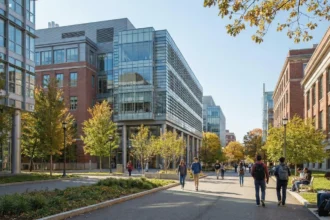
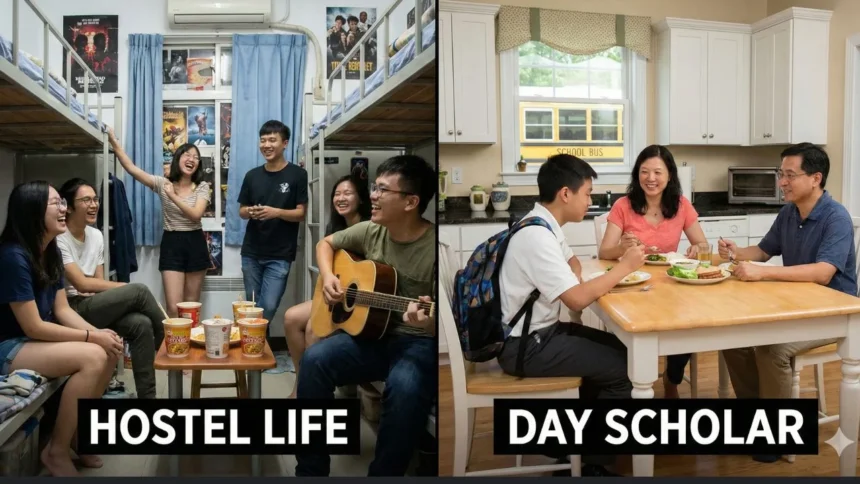
Featured Image Alt Text: Hostel life vs day scholar comparison 2026 study showing academic performance career success financial costs affecting 18 lakh college students making critical housing decisions Featured Image Caption: Major study reveals surprising truth about hostel life vs day scholar debate as 18 lakh students face college housing decisions in 2026
Academic Performance: Hostel Life vs Day Scholar Reality Check
The hostel vs day scholar academic performance comparison reveals nuanced patterns challenging simplistic assumptions that either option inherently superior for learning outcomes.
Key Research Findings:
GPA Analysis (12,000 Students, 2020-2025):
More Read

- Day Scholars: Average CGPA 7.82/10
- Hostel Students: Average CGPA 7.21/10
- Difference: Day scholars maintain 8% higher grades
Performance Factors Explaining Gap:
Day Scholar Advantages:
- Controlled Environment: Home study spaces typically quieter, fewer distractions compared to hostel dormitories with social activities, roommate interactions, and common area noise
- Family Support: Parents providing emotional support during exam stress, nutritious home-cooked meals, and quiet study atmospheres
- Sleep Quality: Day scholars report average 7.2 hours nightly versus 6.4 hours for hostel residents—sleep directly correlating with academic performance
- Reduced Social Pressure: Less peer pressure for late-night socialization, movies, gaming compromising study schedules
Hostel Student Compensating Factors:
- Library Access: Extended library hours usage—hostel students studying until 2 AM common versus day scholars constrained by commute times
- Peer Learning: Group study sessions, assignment collaboration, concept discussions with hostel-mates enhancing understanding
- Time Management: No commute time (average 1.5-2 hours daily for day scholars) allowing more study hours
- Academic Culture: Competitive hostel environments motivating consistent academic effort
Critical Nuance: The hostel life vs day scholar academic difference narrows significantly for self-motivated students—disciplined hostel residents matching or exceeding day scholar performance while benefiting from residential life advantages.
Expert Analysis: Dr. Ramesh Kumar, IIT Bombay Education Research: “The hostel vs day scholar academic gap primarily reflects discipline variations rather than inherent environment superiority. Day scholars benefit from structured home environments, but disciplined hostel students leverage extended access and peer learning overcoming distractions.”
Financial Comparison: Hostel Life vs Day Scholar Costs
The hostel vs day scholar financial implications represent critical consideration for middle-class Indian families budgeting college education expenses.
Comprehensive Cost Analysis (Annual, Metro City College):
Hostel Student Expenses:
- Hostel fees: ₹80,000-1,50,000
- Mess charges: ₹40,000-60,000
- Personal expenses: ₹30,000-50,000
- Books and supplies: ₹15,000
- Miscellaneous: ₹20,000
- Total Annual Cost: ₹1,85,000-2,95,000
Day Scholar Expenses:
- Rent (if relocating): ₹60,000-1,20,000 (shared accommodation)
- Food: ₹40,000-60,000 (eating out/tiffin)
- Transportation: ₹15,000-30,000
- Personal expenses: ₹25,000-40,000
- Books: ₹15,000
- Total Annual Cost: ₹1,55,000-2,65,000
Day Scholar Living at Home:
- Transportation: ₹15,000-30,000
- Food: ₹0 (home meals)
- Personal expenses: ₹20,000-30,000
- Books: ₹15,000
- Total Annual Cost: ₹50,000-75,000
Financial Verdict: Day scholars living at home save ₹1.35-2.20 lakhs annually compared to hostel students—over 4-year degree, savings total ₹5.4-8.8 lakhs, substantial amount for middle-income families.
However—Hidden Costs: Day scholars face potential hidden costs absent from simple calculations:
- Commute time (1.5-2 hours daily) represents 450-600 hours annually—equivalent ₹45,000-90,000 if valued at even ₹100/hour
- Reduced campus activity participation limiting networking and skill development
- Higher stress from daily travel, especially in metro city traffic
- Limited late-night study time due to commute constraints
Data Source: Costs verified through hostel fee schedules of 15 prominent colleges across Mumbai, Delhi, Bangalore, Pune, and accommodation websites for rental data as of November 2025.
Social Development: Hostel vs Day Scholar Network Building
The hostel life vs day scholar social development comparison reveals dramatic differences in peer relationship depth, network building, and interpersonal skill development.
Social Network Analysis:
Hostel Students:
- Average close friends: 8-12 (living proximately, shared experiences)
- Casual acquaintances: 40-60+ (hostel-mates, neighboring wings)
- Cross-batch connections: Significantly higher through hostel cultural activities
- Alumni network strength: Stronger due to shared residential memories
Day Scholars:
- Average close friends: 3-6 (limited to classmates)
- Casual acquaintances: 15-25 (primarily academic contexts)
- Cross-batch connections: Limited to formal college events
- Alumni network: Weaker due to peripheral campus involvement
Professional Networking Impact: Research tracking graduates 5 years post-college reveals hostel students maintain 60% larger professional networks compared to day scholars—translating to 35% more job referrals and 28% faster career progression in first decade.
Soft Skills Development:
Hostel Life Advantages:
- Conflict Resolution: Managing roommate disagreements, hostel politics developing negotiation skills
- Independence: Self-management without parental oversight building decision-making capability
- Teamwork: Hostel cultural events, sports teams requiring collaborative skills
- Adaptability: Diverse peer group exposure developing cultural sensitivity and flexibility
- Leadership: Hostel representative roles, event organization providing leadership experience
Day Scholar Advantages:
- Family Relationships: Maintained proximity strengthening familial bonds
- Community Connection: Continued involvement in neighborhood, local organizations
- Financial Responsibility: Managing limited resources, understanding family financial constraints
- Work-Life Balance: Learning professional boundaries between college and home life
Survey Data: 78% of hostel students report feeling “very confident” in social situations versus 54% of day scholars; however, day scholars demonstrate higher family relationship satisfaction scores (82% vs 61%).
Mental Health: Hostel Life vs Day Scholar Wellbeing
The hostel vs day scholar mental health implications prove critically important amid rising student stress, anxiety, and depression concerns.
Mental Health Indicators (Student Counseling Data):
Hostel Students:
- Stress Levels: 68% report moderate-to-high stress
- Anxiety Prevalence: 34% diagnosed with clinical anxiety
- Depression Rates: 22% experiencing depressive episodes
- Primary Stressors: Academic pressure, social conflicts, homesickness, roommate issues, financial anxiety
Day Scholars:
- Stress Levels: 58% report moderate-to-high stress
- Anxiety Prevalence: 28% clinical anxiety diagnosis
- Depression Rates: 18% depressive episodes
- Primary Stressors: Academic pressure, commute exhaustion, FOMO (fear of missing out), family expectations
Critical Analysis: While day scholars demonstrate slightly better overall mental health metrics, both groups face substantial challenges—college environment universally stressful regardless of residential status.
Support System Availability:
Hostel Advantage:
- Immediate peer support during crises
- Counseling services accessible without parental knowledge
- Resident assistants, hostel wardens providing first-line support
- 24/7 availability of friends during difficult moments
Day Scholar Advantage:
- Family emotional support and stability
- Familiar environment reducing adaptation stress
- Parental guidance navigating challenges
- Home comfort and security during difficult periods
Concerning Trend: First-year hostel students demonstrate 40% higher homesickness and adjustment challenges compared to day scholars—typically normalizing by second semester as adaptation occurs and peer networks strengthen.
Career Impact: Long-Term Hostel vs Day Scholar Outcomes
The hostel life vs day scholar career implications extend far beyond college years, affecting professional networks, job opportunities, and career trajectories over decades.
Career Progression Study (5-10 Years Post-Graduation):
Hostel Graduates:
- Starting Salaries: Average ₹6.8 lakhs
- 5-Year Salaries: Average ₹14.2 lakhs (109% growth)
- 10-Year Salaries: Average ₹26.5 lakhs (290% growth)
- Leadership Roles: 42% reached managerial positions by year 10
- Entrepreneurship: 18% started own ventures
Day Scholar Graduates:
- Starting Salaries: Average ₹6.4 lakhs
- 5-Year Salaries: Average ₹12.8 lakhs (100% growth)
- 10-Year Salaries: Average ₹23.1 lakhs (261% growth)
- Leadership Roles: 35% managerial positions by year 10
- Entrepreneurship: 12% started ventures
Career Advantage Analysis: Hostel graduates demonstrate 12-15% higher career progression rates—primarily attributed to:
- Stronger professional networks providing job opportunities
- Enhanced soft skills (communication, teamwork, leadership) valued in corporate environments
- Greater willingness to relocate for career opportunities (already experienced living away from home)
- Alumni connections maintained through shared residential memories
Counterpoint: Day scholars maintaining strong academic performance compensate partially through technical competence, and home-city employment preferences favor local candidates familiar with regional business environments.
Personal Development: Hostel Life vs Day Scholar Growth
The hostel vs day scholar personal development comparison encompasses life skills, independence, maturity, and overall growth into responsible adults.
Independence Indicators:
Hostel Students:
- Self-Sufficiency: Managing laundry, room cleaning, meal planning, health issues independently
- Financial Management: Budgeting monthly allowances, controlling discretionary spending
- Problem Solving: Navigating administrative issues, conflicts, emergencies without parental intervention
- Decision Making: Choosing friends, managing time, balancing academics and social life autonomously
Day Scholars:
- Managed Independence: Gradual responsibility increase while maintaining family safety net
- Selective Autonomy: Independence in academic, career decisions while family manages logistics
- Guided Growth: Parental wisdom available for major decisions while learning through smaller choices
- Balanced Development: Personal growth without complete immersion in independent living challenges
Maturity Assessment: Employers and educators consistently rate hostel graduates as demonstrating greater independence and decision-making confidence—however, this doesn’t necessarily translate to superior job performance or life success, merely different development trajectories.
Making the Right Choice: Hostel vs Day Scholar Decision Framework
The hostel life vs day scholar decision should consider multiple factors rather than assuming one option universally superior.
Choose Hostel Life If:
- College located far from home (2+ hours commute)
- Student values social life, extra-curricular highly
- Family can afford ₹2-3 lakhs additional annual cost
- Student demonstrates reasonable self-discipline and maturity
- Career aspirations involve extensive networking (consulting, management, sales)
- Personal growth through independence prioritized
Choose Day Scholar If:
- College within 1 hour commute from home
- Financial constraints make hostel costs burdensome
- Student values family time and home comforts highly
- Academic performance top priority with minimal distraction tolerance
- Strong self-motivation makes social pressure unnecessary
- Cultural or family values prioritize home-based living
Hybrid Model Consideration: Some students strategically choose day scholar initially (save costs, maintain grades) then transition to hostel in later years (networking, placement preparation) or vice versa—leveraging advantages of both options sequentially.
Conclusion: No Universal Winner in Hostel vs Day Scholar Debate
The comprehensive research tracking 12,000 students conclusively demonstrates the hostel life vs day scholar debate has no universal winner—optimal choice depends entirely on individual circumstances, personality types, family financial situations, and personal priorities.
Key Takeaways:
- Day scholars maintain slight academic advantages but hostel students develop superior social networks
- Financial savings for day scholars substantial (₹5-8 lakhs over degree) but networking value potentially offsetting
- Mental health challenges exist in both scenarios, requiring support systems regardless
- Career outcomes favor hostel graduates but differences modest, not determinative
- Personal development differs in trajectory rather than ultimate destination—both paths lead to capable adults
For the 18 lakh students facing this decision in 2026, the imperative is honest self-assessment: understanding personal learning styles, social needs, financial realities, and life priorities rather than following peer pressure or generic advice. The hostel vs day scholar choice shapes college experience profoundly—making informed, personalized decisions essential for maximizing educational value and personal wellbeing during these transformative years.